01
今天,我在学校吃了饭。
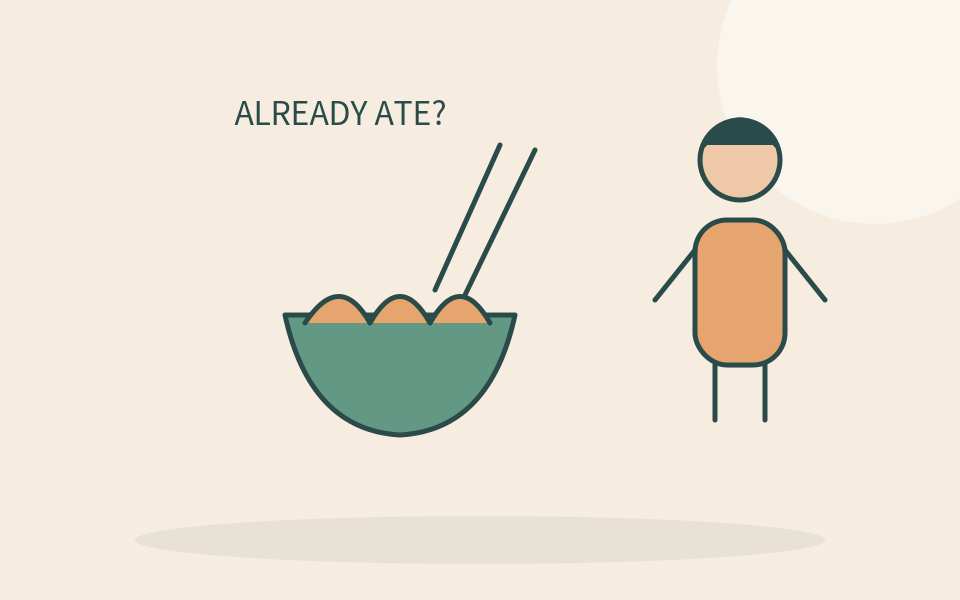
今天,我在学校吃了饭。
的,妈妈做。
她说:“你回来得,来吃吧。”
我说:“我了。”
妈妈问:“吃了什么?”
我说:“米饭、,还有菜。”
妈妈说:“那就吃。”
我吃了一小,吃了一小。
妈妈笑了:“你不是了吗?”
我说:“是啊,学校的饭没有你做的。”
妈妈把大。
我说:“了,这次我了!”
already
currently doing
egg
tasty (food)
to finish; completed
again (for something repeated) (supplemental word / expression)
noodles
bowl; measure word for bowls of food (supplemental word / expression)
just right; just in time (supplemental word / expression)
noon
今天中午,我在学校吃了饭。
jīn tiān zhōng wǔ, wǒ zài xué xiào chī le fàn.
Today, I have lunch at school.
to go home; to return home
回家的时候,妈妈正在做面条。
huí jiā de shí hou, mā ma zhèng zài zuò miàn tiáo.
When I get home, my mother is making noodles.
time; moment
回家的时候,妈妈正在做面条。
huí jiā de shí hou, mā ma zhèng zài zuò miàn tiáo.
When I get home, my mother is making noodles.
to have eaten
我说:“我已经吃过了。”
wǒ shuō: "wǒ yǐ jīng chī guò le. "
I say, “I've already eaten.”
a little; a bit
我说:“米饭、鸡蛋,还有一点菜。”
wǒ shuō: "mǐ fàn, jī dàn, hái yǒu yì diǎn cài. "
I say, “Rice, eggs and a little bit of vegetables.”
but; however
我说:“是啊,可是学校的饭没有你做的面条好吃。”
wǒ shuō: "shì a, kě shì xué xiào de fàn méi yǒu nǐ zuò de miàn tiáo hǎo chī. "
I say, “Yes, but the food at school isn't as tasty as your noodles.”
to bring over here
妈妈把大碗拿过来。
mā ma bǎ dà wǎn ná guò lái.
My mother brings over the big bowl.
do not need to; no need
我说:“不用了,这次我真的吃完了!”
wǒ shuō: "bú yòng le, zhè cì wǒ zhēn de chī wán le! "
I say, “No, thank you. This time I've really finished eating!”
to finish eating
我说:“不用了,这次我真的吃完了!”
wǒ shuō: "bú yòng le, zhè cì wǒ zhēn de chī wán le! "
I say, “No, thank you. This time I've really finished eating!”
really; truly
我说:“不用了,这次我真的吃完了!”
wǒ shuō: "bú yòng le, zhè cì wǒ zhēn de chī wán le! "
I say, “No, thank you. This time I've really finished eating!”
已经 emphasizes that something has already happened. The exact ending depends on the verb and context.
“已经”强调事情已发生,句尾形式根据具体动作和语境变化。
我已经吃饭了。I have already eaten.
她已经回家了。She has already gone home.
正在 emphasizes an action in progress at the time being described.
“正在”强调所说时间里正在进行的动作。
妈妈正在做饭。My mother is cooking.
我正在写字。I am writing characters.
Turn both off to practice with Chinese only.
Answers and explanations appear after you submit.