01
星期日,我要把一书到新的里。
星期日,我要把一书到新的里。
爸爸看见了,走过来帮我拿。
我说:“这次让我吧。”
他,站在看。
我一,就子比想的,走了就了。
爸爸问:“现在吗?”
我想了一会儿,说:“不用拿子。我可以先拿的书。”
我把书两次,都好了。
爸爸笑了:“做,不是说一定要一次。”
我坐下来,手有点累,心里却很高兴。
以前的东西,我总是先找爸爸。
今天才知道,有时候先换一个,事情就没那么了。
box; measure word for a boxful (supplemental word)
星期日,我要把一箱书搬到新的房间里。
xīng qī rì, wǒ yào bǎ yì xiāng shū bān dào xīn de fáng jiān lǐ.
On Sunday, I needed to move a box of books into my new room.
to move or carry something
星期日,我要把一箱书搬到新的房间里。
xīng qī rì, wǒ yào bǎ yì xiāng shū bān dào xīn de fáng jiān lǐ.
On Sunday, I needed to move a box of books into my new room.
room (extension vocabulary: HSK2)
星期日,我要把一箱书搬到新的房间里。
xīng qī rì, wǒ yào bǎ yì xiāng shū bān dào xīn de fáng jiān lǐ.
On Sunday, I needed to move a box of books into my new room.
to prepare; to plan
爸爸看见了,走过来准备帮我拿。
bà ba kàn jiàn le, zǒu guò lái zhǔn bèi bāng wǒ ná.
My father saw it and came over to help carry it.
oneself; one's own (supplemental word / expression)
我说:“这次让我自己试试吧。”
wǒ shuō: "zhè cì ràng wǒ zì jǐ shì shi ba. "
I said, “Let me try by myself this time.”
to give something a try
我说:“这次让我自己试试吧。”
wǒ shuō: "zhè cì ràng wǒ zì jǐ shì shi ba. "
I said, “Let me try by myself this time.”
nodded (supplemental expression)
他点了点头,站在旁边看。
tā diǎn le diǎn tóu, zhàn zài páng biān kàn.
He nodded and stood nearby to watch.
beside
他点了点头,站在旁边看。
tā diǎn le diǎn tóu, zhàn zài páng biān kàn.
He nodded and stood nearby to watch.
to pick up; to lift (supplemental expression)
我一拿起来,就发现箱子比想的重,走了几步就放下了。
wǒ yì ná qǐ lái, jiù fā xiàn xiāng zi bǐ xiǎng de zhòng, zǒu le jǐ bù jiù fàng xià le.
As soon as I lifted it, I found it heavier than expected and put it down after a few steps.
to discover; to notice
我一拿起来,就发现箱子比想的重,走了几步就放下了。
wǒ yì ná qǐ lái, jiù fā xiàn xiāng zi bǐ xiǎng de zhòng, zǒu le jǐ bù jiù fàng xià le.
As soon as I lifted it, I found it heavier than expected and put it down after a few steps.
heavy
我一拿起来,就发现箱子比想的重,走了几步就放下了。
wǒ yì ná qǐ lái, jiù fā xiàn xiāng zi bǐ xiǎng de zhòng, zǒu le jǐ bù jiù fàng xià le.
As soon as I lifted it, I found it heavier than expected and put it down after a few steps.
a few steps
我一拿起来,就发现箱子比想的重,走了几步就放下了。
wǒ yì ná qǐ lái, jiù fā xiàn xiāng zi bǐ xiǎng de zhòng, zǒu le jǐ bù jiù fàng xià le.
As soon as I lifted it, I found it heavier than expected and put it down after a few steps.
to put down (supplemental expression)
我一拿起来,就发现箱子比想的重,走了几步就放下了。
wǒ yì ná qǐ lái, jiù fā xiàn xiāng zi bǐ xiǎng de zhòng, zǒu le jǐ bù jiù fàng xià le.
As soon as I lifted it, I found it heavier than expected and put it down after a few steps.
to need (supplemental word / expression)
爸爸问:“现在需要帮忙吗?”
bà ba wèn: "xiàn zài xū yào bāng máng ma? "
My father asked, “Do you need help now?”
to help
爸爸问:“现在需要帮忙吗?”
bà ba wèn: "xiàn zài xū yào bāng máng ma? "
My father asked, “Do you need help now?”
whole; entire (supplemental word)
我想了一会儿,说:“不用拿整个箱子。我可以先拿一半的书。”
wǒ xiǎng le yí huì er, shuō: "bú yòng ná zhěng gè xiāng zi. wǒ kě yǐ xiān ná yí bàn de shū. "
I thought for a moment. “I don't have to carry the whole box. I can take half the books first.”
half
我想了一会儿,说:“不用拿整个箱子。我可以先拿一半的书。”
wǒ xiǎng le yí huì er, shuō: "bú yòng ná zhěng gè xiāng zi. wǒ kě yǐ xiān ná yí bàn de shū. "
I thought for a moment. “I don't have to carry the whole box. I can take half the books first.”
to divide into (supplemental expression)
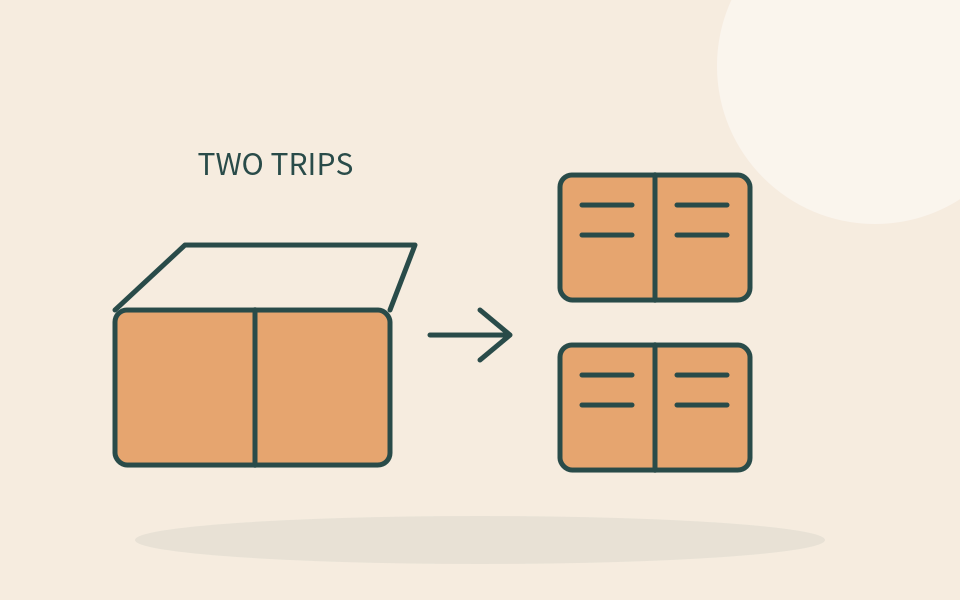
我把书分成两次搬,终于都搬好了。
wǒ bǎ shū fēn chéng liǎng cì bān, zhōng yú dōu bān hǎo le.
I moved the books in two trips and eventually finished.
finally (after waiting or effort)
我把书分成两次搬,终于都搬好了。
wǒ bǎ shū fēn chéng liǎng cì bān, zhōng yú dōu bān hǎo le.
I moved the books in two trips and eventually finished.
to finish doing something
爸爸笑了:“自己做,不是说一定要一次做完。”
bà ba xiào le: "zì jǐ zuò, bú shì shuō yí dìng yào yí cì zuò wán. "
My father smiled. “Doing it yourself doesn't mean you have to finish in one go.”
to rest
我坐下来休息,手有点累,心里却很高兴。
wǒ zuò xià lái xiū xi, shǒu yǒu diǎn lèi, xīn lǐ què hěn gāo xìng.
I sat down to rest. My hands were a little tired, but I felt happy.
to encounter; to come across (supplemental word)
以前遇到重的东西,我总是先找爸爸。
yǐ qián yù dào zhòng de dōng xī, wǒ zǒng shì xiān zhǎo bà ba.
Before, whenever something was heavy, I always turned to my father first.
way; method (supplemental word)
今天才知道,有时候先换一个办法,事情就没那么难了。
jīn tiān cái zhī dào, yǒu shí hou xiān huàn yí gè bàn fǎ, shì qíng jiù méi nà me nán le.
Today I learned that sometimes changing your approach first makes things less difficult.
difficult
今天才知道,有时候先换一个办法,事情就没那么难了。
jīn tiān cái zhī dào, yǒu shí hou xiān huàn yí gè bàn fǎ, shì qíng jiù méi nà me nán le.
Today I learned that sometimes changing your approach first makes things less difficult.
Use 一…就… when the second action follows immediately after the first. 一 here does not count one object.
“一……就……”表示前面的动作一发生,后面的动作马上发生。
我一拿起来,就觉得很重。As soon as I lifted it, I felt it was heavy.
我一到家,就给你打电话。I will call you as soon as I get home.
Use 比 to compare two things. Put the adjective after what you compare with. 想的 can mean what I expected.
“比”用于比较,形容词放在比较对象后面。
箱子比想的重。The box is heavier than expected.
这条路比那条路长。This route is longer than that one.
Turn both off to practice with Chinese only.
Answers and explanations appear after you submit.