01
我想和小明去。
我想和小明去。
我问:“我们去,好吗?”
他说:“好。那就见。”
我:“那么早?我说的,是八点。”
小明六点,他已经不早了。
我,还想。
我们笑了,发现一个,对两个人来说不一样。
小明问:“那可以吗?”
我说:“可以。我把衣服。”
第二天,我们都到了。
跑完以后,他想去吃,我也了。
这一次,我们没有只说‘’,而是把见面的时间说了。
weekend
我周末想和小明一起去跑步。
wǒ zhōu mò xiǎng hé xiǎo míng yì qǐ qù pǎo bù.
At the weekend, I wanted to go running with Xiaoming.
together (extension word: classic HSK2)
我周末想和小明一起去跑步。
wǒ zhōu mò xiǎng hé xiǎo míng yì qǐ qù pǎo bù.
At the weekend, I wanted to go running with Xiaoming.
to run
我周末想和小明一起去跑步。
wǒ zhōu mò xiǎng hé xiǎo míng yì qǐ qù pǎo bù.
At the weekend, I wanted to go running with Xiaoming.
a little earlier
我问:“我们早点去,好吗?”
wǒ wèn: "wǒ men zǎo diǎn qù, hǎo ma? "
I asked, “Shall we go early?”
half past six
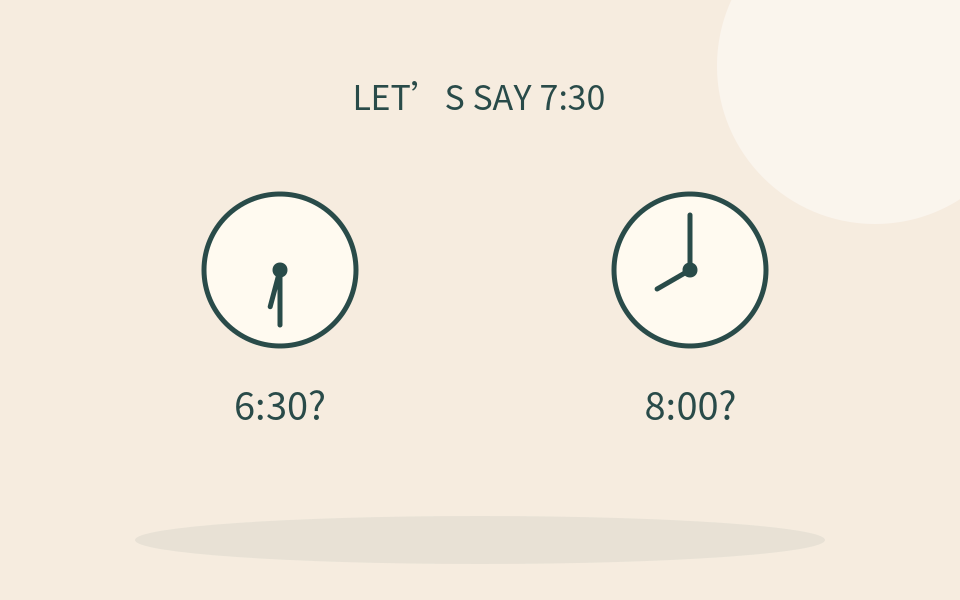
他说:“好。那就六点半见。”
tā shuō: "hǎo. nà jiù liù diǎn bàn jiàn. "
He said, “Okay. Let's meet at half past six.”
to be surprised (supplemental expression)
我吃了一惊:“那么早?我说的早点,是八点。”
wǒ chī le yì jīng: "nà me zǎo? wǒ shuō de zǎo diǎn, shì bā diǎn. "
I was surprised. “That early? By early, I meant eight.”
every day (每 is an HSK2 extension)
小明每天六点起床,他觉得六点半已经不早了。
xiǎo míng měi tiān liù diǎn qǐ chuáng, tā jué de liù diǎn bàn yǐ jīng bù zǎo le.
Xiaoming gets up at six every day and doesn't consider half past six early.
to get up
小明每天六点起床,他觉得六点半已经不早了。
xiǎo míng měi tiān liù diǎn qǐ chuáng, tā jué de liù diǎn bàn yǐ jīng bù zǎo le.
Xiaoming gets up at six every day and doesn't consider half past six early.
to feel; to think
小明每天六点起床,他觉得六点半已经不早了。
xiǎo míng měi tiān liù diǎn qǐ chuáng, tā jué de liù diǎn bàn yǐ jīng bù zǎo le.
Xiaoming gets up at six every day and doesn't consider half past six early.
usually; in everyday life
我平时七点半起床,周末还想多睡一会儿。
wǒ píng shí qī diǎn bàn qǐ chuáng, zhōu mò hái xiǎng duō shuì yí huì er.
I normally get up at half past seven and want to sleep a little longer at weekends.
half past seven
我平时七点半起床,周末还想多睡一会儿。
wǒ píng shí qī diǎn bàn qǐ chuáng, zhōu mò hái xiǎng duō shuì yí huì er.
I normally get up at half past seven and want to sleep a little longer at weekends.
many; much; more
我平时七点半起床,周末还想多睡一会儿。
wǒ píng shí qī diǎn bàn qǐ chuáng, zhōu mò hái xiǎng duō shuì yí huì er.
I normally get up at half past seven and want to sleep a little longer at weekends.
to sleep
我平时七点半起床,周末还想多睡一会儿。
wǒ píng shí qī diǎn bàn qǐ chuáng, zhōu mò hái xiǎng duō shuì yí huì er.
I normally get up at half past seven and want to sleep a little longer at weekends.
a little while (supplemental word / expression)
我平时七点半起床,周末还想多睡一会儿。
wǒ píng shí qī diǎn bàn qǐ chuáng, zhōu mò hái xiǎng duō shuì yí huì er.
I normally get up at half past seven and want to sleep a little longer at weekends.
same
我们笑了,发现同一个词,对两个人来说可能不一样。
wǒ men xiào le, fā xiàn tóng yí gè cí, duì liǎng gè rén lái shuō kě néng bù yí yàng.
We laughed and realised that the same word can mean different things to different people.
word
我们笑了,发现同一个词,对两个人来说可能不一样。
wǒ men xiào le, fā xiàn tóng yí gè cí, duì liǎng gè rén lái shuō kě néng bù yí yàng.
We laughed and realised that the same word can mean different things to different people.
might; possibly
我们笑了,发现同一个词,对两个人来说可能不一样。
wǒ men xiào le, fā xiàn tóng yí gè cí, duì liǎng gè rén lái shuō kě néng bù yí yàng.
We laughed and realised that the same word can mean different things to different people.
in advance; ahead of time (supplemental word)
我说:“可以。我提前把衣服准备好。”
wǒ shuō: "kě yǐ. wǒ tí qián bǎ yī fu zhǔn bèi hǎo. "
I said, “Yes. I'll get my clothes ready beforehand.”
to be ready; to finish preparing
我说:“可以。我提前把衣服准备好。”
wǒ shuō: "kě yǐ. wǒ tí qián bǎ yī fu zhǔn bèi hǎo. "
I said, “Yes. I'll get my clothes ready beforehand.”
on time (supplemental word)
第二天,我们都准时到了。
dì èr tiān, wǒ men dōu zhǔn shí dào le.
The next day, we both arrived on time.
breakfast
跑完以后,他想去吃早饭,我也觉得肚子饿了。
pǎo wán yǐ hòu, tā xiǎng qù chī zǎo fàn, wǒ yě jué de dù zi è le.
After running, he wanted breakfast, and I felt hungry too.
stomach; belly (supplemental word)
跑完以后,他想去吃早饭,我也觉得肚子饿了。
pǎo wán yǐ hòu, tā xiǎng qù chī zǎo fàn, wǒ yě jué de dù zi è le.
After running, he wanted breakfast, and I felt hungry too.
hungry (supplemental word / expression)
跑完以后,他想去吃早饭,我也觉得肚子饿了。
pǎo wán yǐ hòu, tā xiǎng qù chī zǎo fàn, wǒ yě jué de dù zi è le.
After running, he wanted breakfast, and I felt hungry too.
clear; clearly
这一次,我们没有只说‘早点’,而是把见面的时间说清楚了。
zhè yí cì, wǒ men méi yǒu zhǐ shuō'zǎo diǎn', ér shì bǎ jiàn miàn de shí jiān shuō qīng chu le.
This time, instead of just saying “early,” we had agreed on a clear meeting time.
Use 对…来说 to give a viewpoint. Different people may understand or experience the same thing differently.
“对……来说”表示从某个人的角度看。
对我来说,八点已经很早了。For me, eight is already early.
对两个人来说,这个词可能不一样。For the two people, this word may mean different things.
Put 以后 after an event or action to say what happens after it. On its own, 以后 can also mean later or in the future.
“以后”放在事件或动作后面,表示那件事之后。
跑完以后,我们去吃早饭。After running, we go for breakfast.
看完以后,我把书还给她。After reading it, I return the book to her.
Turn both off to practice with Chinese only.
Answers and explanations appear after you submit.