01
我学的,只会说“你好”和“谢谢”。
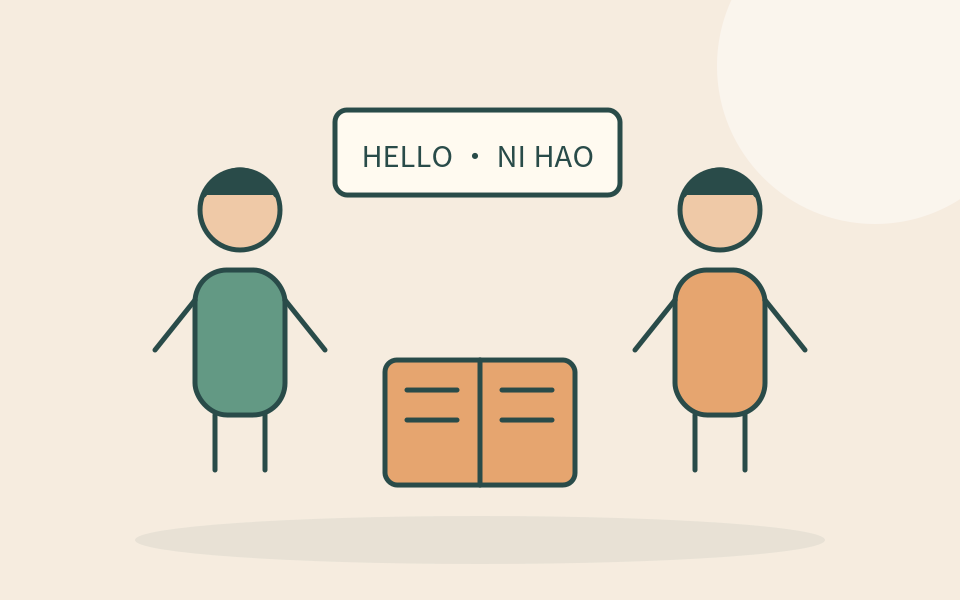
我学的,只会说“你好”和“谢谢”。
,我了小明。
他想学,我想学,我们个见两。
前个小时,我们说;后个小时,我们说。
我了,他就慢慢说一。
我没,也可以问他。
今天,我们吃饭。
我用说了我昨天做的事,他都了。
他说:“你说得好了!”
我很。
可是吃完饭,他说了,我又没。
我笑着问:“请说一,好吗?”
English language (supplemental word / expression)
every
time; occurrence
half (supplemental word / expression)
to understand
measure word for a complete repetition (supplemental word / expression)
to understand what one hears (supplemental word / expression)
more and more; increasingly (supplemental word / expression)
to start; to begin
我开始学汉语的时候,只会说“你好”和“谢谢”。
wǒ kāi shǐ xué hàn yǔ de shí hou, zhǐ huì shuō"nǐ hǎo"hé"xiè xiè".
When I start learning Chinese, I can only say “hello” and “thank you.”
to know; to recognize
后来,我认识了小明。
hòu lái, wǒ rèn shi le xiǎo míng.
Later, I meet Xiaoming.
time; moment
我开始学汉语的时候,只会说“你好”和“谢谢”。
wǒ kāi shǐ xué hàn yǔ de shí hou, zhǐ huì shuō"nǐ hǎo"hé"xiè xiè".
When I start learning Chinese, I can only say “hello” and “thank you.”
later; afterwards
后来,我认识了小明。
hòu lái, wǒ rèn shi le xiǎo míng.
Later, I meet Xiaoming.
Chinese language
我开始学汉语的时候,只会说“你好”和“谢谢”。
wǒ kāi shǐ xué hàn yǔ de shí hou, zhǐ huì shuō"nǐ hǎo"hé"xiè xiè".
When I start learning Chinese, I can only say “hello” and “thank you.”
week; day of the week
他想学英语,我想学汉语,我们每个星期见两次。
tā xiǎng xué yīng yǔ, wǒ xiǎng xué hàn yǔ, wǒ men měi gè xīng qī jiàn liǎng cì.
He wants to learn English, and I want to learn Chinese. We meet twice a week.
together
今天,我们一起吃饭。
jīn tiān, wǒ men yì qǐ chī fàn.
Today, we have a meal together.
happy; pleased
我很高兴。
wǒ hěn gāo xìng.
I'm very happy.
to say something incorrectly
有时候我说错了,他就慢慢再说一遍。
yǒu shí hou wǒ shuō cuò le, tā jiù màn màn zài shuō yí biàn.
Sometimes I say something wrong, and he slowly says it again.
one sentence; something someone says
可是吃完饭,他说了一句话,我又没听懂。
kě shì chī wán fàn, tā shuō le yí jù huà, wǒ yòu méi tīng dǒng.
But after the meal, he says a sentence that I don't understand again.
sometimes
有时候我说错了,他就慢慢再说一遍。
yǒu shí hou wǒ shuō cuò le, tā jiù màn màn zài shuō yí biàn.
Sometimes I say something wrong, and he slowly says it again.
again; then
有时候我说错了,他就慢慢再说一遍。
yǒu shí hou wǒ shuō cuò le, tā jiù màn màn zài shuō yí biàn.
Sometimes I say something wrong, and he slowly says it again.
又 often describes something that has happened again. 再 often asks for or plans another repetition.
“又”常说明动作再次发生;“再”常用于打算或请求再做一次。
他又来了。He has come again.
请再说一遍。Please say it again.
Use 越来越 for a change that develops over time. This is a supplemental pattern beyond the basic HSK2 core.
“越来越”表示随时间发展而变化,是本单元的补充句型。
我说得越来越好了。My speaking is getting better and better.
天气越来越热了。The weather is getting hotter and hotter.
Turn both off to practice with Chinese only.
Answers and explanations appear after you submit.