01
我家旁边住着小明。
我家旁边住着小明。
他开始学,每天晚上都。
前几天,我觉得很。
可是昨天,他很晚,我。
今天下班以后,我去找他。
我说:“你弹得好了。,晚上十点以后,我想早点。”
小明有点:“对不起,我没。我上班,晚上能练。”
我们想了一会儿。
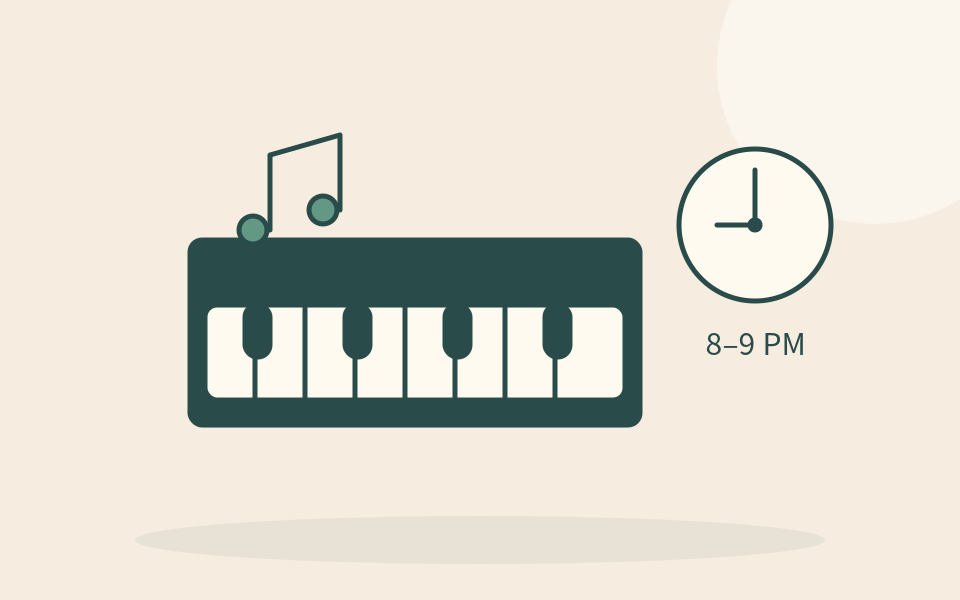
他问:“八点到九点可以吗?”
我说:“可以。那个时候我也还没睡。”
晚上八点,音乐又来了。
九点,小明就停了。
他发来一条:“今天早一点。”
我他:“谢谢。那歌,我很喜欢。”
我,有的时候,早点,比自己好。
recently; these days
他最近开始学弹钢琴,每天晚上都练习。
tā zuì jìn kāi shǐ xué tán gāng qín, měi tiān wǎn shàng dōu liàn xí.
He recently started learning to play the piano and practises every evening.
to play the piano
他最近开始学弹钢琴,每天晚上都练习。
tā zuì jìn kāi shǐ xué tán gāng qín, měi tiān wǎn shàng dōu liàn xí.
He recently started learning to play the piano and practises every evening.
to practise; practice
他最近开始学弹钢琴,每天晚上都练习。
tā zuì jìn kāi shǐ xué tán gāng qín, měi tiān wǎn shàng dōu liàn xí.
He recently started learning to play the piano and practises every evening.
pleasant to listen to; sounds good
前几天,我觉得很好听。
qián jǐ tiān, wǒ jué de hěn hǎo tīng.
At first, I thought it sounded very nice.
to be unable to fall asleep
可是昨天,他练到很晚,我一直睡不着。
kě shì zuó tiān, tā liàn dào hěn wǎn, wǒ yì zhí shuì bu zháo.
But yesterday he practised until late, and I couldn't get to sleep.
more and more; increasingly
我说:“你弹得越来越好了。不过,晚上十点以后,我想早点休息。”
wǒ shuō: "nǐ tán de yuè lái yuè hǎo le. bú guò, wǎn shàng shí diǎn yǐ hòu, wǒ xiǎng zǎo diǎn xiū xi. "
I said, “You're getting better and better. But after ten at night, I'd like to get some rest.”
but; however (supplemental connective)
我说:“你弹得越来越好了。不过,晚上十点以后,我想早点休息。”
wǒ shuō: "nǐ tán de yuè lái yuè hǎo le. bú guò, wǎn shàng shí diǎn yǐ hòu, wǒ xiǎng zǎo diǎn xiū xi. "
I said, “You're getting better and better. But after ten at night, I'd like to get some rest.”
to rest
我说:“你弹得越来越好了。不过,晚上十点以后,我想早点休息。”
wǒ shuō: "nǐ tán de yuè lái yuè hǎo le. bú guò, wǎn shàng shí diǎn yǐ hòu, wǒ xiǎng zǎo diǎn xiū xi. "
I said, “You're getting better and better. But after ten at night, I'd like to get some rest.”
embarrassed; sorry (a polite phrase)
小明有点不好意思:“对不起,我没注意时间。我白天上班,只有晚上能练。”
xiǎo míng yǒu diǎn bù hǎo yì si: "duì bù qǐ, wǒ méi zhù yì shí jiān. wǒ bái tiān shàng bān, zhǐ yǒu wǎn shàng néng liàn. "
Xiaoming was a little embarrassed. “Sorry, I wasn't watching the time. I work during the day and can only practise at night.”
to pay attention to
小明有点不好意思:“对不起,我没注意时间。我白天上班,只有晚上能练。”
xiǎo míng yǒu diǎn bù hǎo yì si: "duì bù qǐ, wǒ méi zhù yì shí jiān. wǒ bái tiān shàng bān, zhǐ yǒu wǎn shàng néng liàn. "
Xiaoming was a little embarrassed. “Sorry, I wasn't watching the time. I work during the day and can only practise at night.”
daytime
小明有点不好意思:“对不起,我没注意时间。我白天上班,只有晚上能练。”
xiǎo míng yǒu diǎn bù hǎo yì si: "duì bù qǐ, wǒ méi zhù yì shí jiān. wǒ bái tiān shàng bān, zhǐ yǒu wǎn shàng néng liàn. "
Xiaoming was a little embarrassed. “Sorry, I wasn't watching the time. I work during the day and can only practise at night.”
only; there is only
小明有点不好意思:“对不起,我没注意时间。我白天上班,只有晚上能练。”
xiǎo míng yǒu diǎn bù hǎo yì si: "duì bù qǐ, wǒ méi zhù yì shí jiān. wǒ bái tiān shàng bān, zhǐ yǒu wǎn shàng néng liàn. "
Xiaoming was a little embarrassed. “Sorry, I wasn't watching the time. I work during the day and can only practise at night.”
to finish; to end
他发来一条消息:“今天早一点结束。”
tā fā lái yì tiáo xiāo xī: "jīn tiān zǎo yì diǎn jié shù. "
He sent a message. “I'm finishing earlier today.”
message; news (supplemental word)
他发来一条消息:“今天早一点结束。”
tā fā lái yì tiáo xiāo xī: "jīn tiān zǎo yì diǎn jié shù. "
He sent a message. “I'm finishing earlier today.”
to reply (in this story; supplemental use)
我回他:“谢谢。刚才那首歌,我很喜欢。”
wǒ huí tā: "xiè xiè. gāng cái nà shǒu gē, wǒ hěn xǐ huan. "
I replied, “Thank you. I really liked that last song.”
just now
我回他:“谢谢。刚才那首歌,我很喜欢。”
wǒ huí tā: "xiè xiè. gāng cái nà shǒu gē, wǒ hěn xǐ huan. "
I replied, “Thank you. I really liked that last song.”
measure word for songs and poems
我回他:“谢谢。刚才那首歌,我很喜欢。”
wǒ huí tā: "xiè xiè. gāng cái nà shǒu gē, wǒ hěn xǐ huan. "
I replied, “Thank you. I really liked that last song.”
question; problem
我发现,有问题的时候,早点说出来,比自己一直生气好。
wǒ fā xiàn, yǒu wèn tí de shí hou, zǎo diǎn shuō chū lái, bǐ zì jǐ yì zhí shēng qì hǎo.
I realised that when there's a problem, speaking about it early is better than staying angry on your own.
to say something aloud; to speak about it
我发现,有问题的时候,早点说出来,比自己一直生气好。
wǒ fā xiàn, yǒu wèn tí de shí hou, zǎo diǎn shuō chū lái, bǐ zì jǐ yì zhí shēng qì hǎo.
I realised that when there's a problem, speaking about it early is better than staying angry on your own.
to be angry
我发现,有问题的时候,早点说出来,比自己一直生气好。
wǒ fā xiàn, yǒu wèn tí de shí hou, zǎo diǎn shuō chū lái, bǐ zì jǐ yì zhí shēng qì hǎo.
I realised that when there's a problem, speaking about it early is better than staying angry on your own.
time
小明有点不好意思:“对不起,我没注意时间。我白天上班,只有晚上能练。”
xiǎo míng yǒu diǎn bù hǎo yì si: "duì bù qǐ, wǒ méi zhù yì shí jiān. wǒ bái tiān shàng bān, zhǐ yǒu wǎn shàng néng liàn. "
Xiaoming was a little embarrassed. “Sorry, I wasn't watching the time. I work during the day and can only practise at night.”
continuously; all along
可是昨天,他练到很晚,我一直睡不着。
kě shì zuó tiān, tā liàn dào hěn wǎn, wǒ yì zhí shuì bu zháo.
But yesterday he practised until late, and I couldn't get to sleep.
to discover; to notice
我发现,有问题的时候,早点说出来,比自己一直生气好。
wǒ fā xiàn, yǒu wèn tí de shí hou, zǎo diǎn shuō chū lái, bǐ zì jǐ yì zhí shēng qì hǎo.
I realised that when there's a problem, speaking about it early is better than staying angry on your own.
to practise until a time
可是昨天,他练到很晚,我一直睡不着。
kě shì zuó tiān, tā liàn dào hěn wǎn, wǒ yì zhí shuì bu zháo.
But yesterday he practised until late, and I couldn't get to sleep.
Use "越来越" before a description to show gradual change. It can describe feelings or skills.
“越来越”表示一个情况慢慢发生变化。
我越来越着急。I am getting more and more anxious.
你弹得越来越好了。You are playing better and better.
Here "只有" means only: evening is the only time when Xiaoming can practise. It does not mean that he is the only person who can play.
这里的“只有”表示能做这件事的时间只有这一个。
只有晚上能练。I can only practise in the evening.
我只有周末能去。I can only go at the weekend.
Turn both off to practice with Chinese only.
Answers and explanations appear after you submit.