01
,小明让我把他。
,小明让我把他。
我怕,就在手机上设了一个。
,手机了。
我打开,才发现还没好。
有些在手机里,有些在的里。
我忙了一个小时,才把它们都出来。
小明以后说:“谢谢,我刚才还在想,你是不是忘了。”
我说:“没有忘,可是得太晚了。”
他笑了:“不是让你来就结束,还要做。”
下次,我把设在。
这次,我了,到了的,发出去就行。
手机还是只了一次,可是我没有再。
Monday
星期一,小明让我星期三把照片发给他。
xīng qī yī, xiǎo míng ràng wǒ xīng qī sān bǎ zhào piàn fā gěi tā.
On Monday, Xiaoming asked me to send him some photos on Wednesday.
to forget
我怕忘记,就在手机上设了一个提醒。
wǒ pà wàng jì, jiù zài shǒu jī shàng shè le yí gè tí xǐng.
Afraid of forgetting, I set a reminder on my phone.
Wednesday
星期一,小明让我星期三把照片发给他。
xīng qī yī, xiǎo míng ràng wǒ xīng qī sān bǎ zhào piàn fā gěi tā.
On Monday, Xiaoming asked me to send him some photos on Wednesday.
photograph (extension word: classic HSK3)
星期一,小明让我星期三把照片发给他。
xīng qī yī, xiǎo míng ràng wǒ xīng qī sān bǎ zhào piàn fā gěi tā.
On Monday, Xiaoming asked me to send him some photos on Wednesday.
reminder; to remind (supplemental word)
我怕忘记,就在手机上设了一个提醒。
wǒ pà wàng jì, jiù zài shǒu jī shàng shè le yí gè tí xǐng.
Afraid of forgetting, I set a reminder on my phone.
evening; at night
星期三晚上十点,手机终于响了。
xīng qī sān wǎn shàng shí diǎn, shǒu jī zhōng yú xiǎng le.
At ten on Wednesday night, my phone finally rang.
ten o'clock
星期三晚上十点,手机终于响了。
xīng qī sān wǎn shàng shí diǎn, shǒu jī zhōng yú xiǎng le.
At ten on Wednesday night, my phone finally rang.
to ring; to make a sound (supplemental word)
星期三晚上十点,手机终于响了。
xīng qī sān wǎn shàng shí diǎn, shǒu jī zhōng yú xiǎng le.
At ten on Wednesday night, my phone finally rang.
to remember; to think of (supplemental word)
他笑了:“提醒不是让你想起来就结束,还要留时间做。”
tā xiào le: "tí xǐng bú shì ràng nǐ xiǎng qǐ lái jiù jié shù, hái yào liú shí jiān zuò. "
He laughed. “A reminder shouldn't just make you remember. It should leave time to do the task too.”
to be ready; to finish preparing
这次,我早点准备好了,到了约好的时间,直接发出去就行。
zhè cì, wǒ zǎo diǎn zhǔn bèi hǎo le, dào le yuē hǎo de shí jiān, zhí jiē fā chū qù jiù xíng.
This time, I got everything ready earlier and only had to send it at the agreed time.
before; previously (supplemental word / expression)
有些照片在手机里,有些在以前的电脑里。
yǒu xiē zhào piàn zài shǒu jī lǐ, yǒu xiē zài yǐ qián de diàn nǎo lǐ.
Some were on my phone, and others were on my old computer.
to look for
我忙了一个小时,才把它们都找出来。
wǒ máng le yí gè xiǎo shí, cái bǎ tā men dōu zhǎo chū lái.
It took me an hour to find them all.
finally (after waiting or effort)
星期三晚上十点,手机终于响了。
xīng qī sān wǎn shàng shí diǎn, shǒu jī zhōng yú xiǎng le.
At ten on Wednesday night, my phone finally rang.
computer
我打开电脑,才发现照片还没整理好。
wǒ dǎ kāi diàn nǎo, cái fā xiàn zhào piàn hái méi zhěng lǐ hǎo.
I opened my computer and realised the photos weren't organised yet.
to sort out; to organise (supplemental word)
我打开电脑,才发现照片还没整理好。
wǒ dǎ kāi diàn nǎo, cái fā xiàn zhào piàn hái méi zhěng lǐ hǎo.
I opened my computer and realised the photos weren't organised yet.
to send to someone
星期一,小明让我星期三把照片发给他。
xīng qī yī, xiǎo míng ràng wǒ xīng qī sān bǎ zhào piàn fā gěi tā.
On Monday, Xiaoming asked me to send him some photos on Wednesday.
to receive
小明收到以后说:“谢谢,我刚才还在想,你是不是忘了。”
xiǎo míng shōu dào yǐ hòu shuō: "xiè xiè, wǒ gāng cái hái zài xiǎng, nǐ shì bu shì wàng le. "
After receiving them, Xiaoming said, “Thanks. I was just wondering whether you'd forgotten.”
to be anxious; to be in a hurry
手机还是只响了一次,可是我没有再着急。
shǒu jī hái shì zhǐ xiǎng le yí cì, kě shì wǒ méi yǒu zài zháo jí.
My phone still only rang once, but I wasn't anxious again.
to leave; to allow (time)
他笑了:“提醒不是让你想起来就结束,还要留时间做。”
tā xiào le: "tí xǐng bú shì ràng nǐ xiǎng qǐ lái jiù jié shù, hái yào liú shí jiān zuò. "
He laughed. “A reminder shouldn't just make you remember. It should leave time to do the task too.”
time
他笑了:“提醒不是让你想起来就结束,还要留时间做。”
tā xiào le: "tí xǐng bú shì ràng nǐ xiǎng qǐ lái jiù jié shù, hái yào liú shí jiān zuò. "
He laughed. “A reminder shouldn't just make you remember. It should leave time to do the task too.”
the previous day
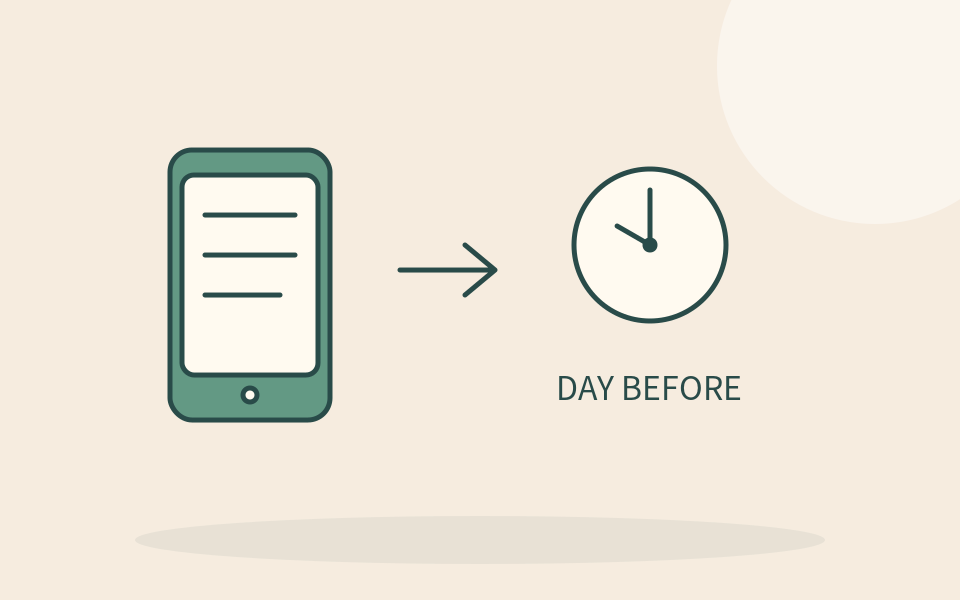
下次,我把提醒设在前一天晚上。
xià cì, wǒ bǎ tí xǐng shè zài qián yì tiān wǎn shàng.
Next time, I set it for the previous evening.
a little earlier
这次,我早点准备好了,到了约好的时间,直接发出去就行。
zhè cì, wǒ zǎo diǎn zhǔn bèi hǎo le, dào le yuē hǎo de shí jiān, zhí jiē fā chū qù jiù xíng.
This time, I got everything ready earlier and only had to send it at the agreed time.
directly (supplemental word)
这次,我早点准备好了,到了约好的时间,直接发出去就行。
zhè cì, wǒ zǎo diǎn zhǔn bèi hǎo le, dào le yuē hǎo de shí jiān, zhí jiē fā chū qù jiù xíng.
This time, I got everything ready earlier and only had to send it at the agreed time.
to arrange or agree on something
这次,我早点准备好了,到了约好的时间,直接发出去就行。
zhè cì, wǒ zǎo diǎn zhǔn bèi hǎo le, dào le yuē hǎo de shí jiān, zhí jiē fā chū qù jiù xíng.
This time, I got everything ready earlier and only had to send it at the agreed time.
Here 不是 rejects an incomplete understanding, and 还 adds something else that is needed. This is not the fixed pattern 不是…而是….
这里“不是”说明前面的理解不完整,“还”补充还需要做的事。
提醒不是让你想起来就结束,还要留时间做。A reminder is not finished when you remember; it must also leave time to act.
准备不是只写计划,还要带好东西。Preparing is not just writing a plan; you must bring what you need too.
Use 就行 to say that the action or condition is sufficient. It often makes a request or instruction sound simple.
“就行”表示做到前面的事情就可以了。
直接发出去就行。Just send it directly; that is enough.
把时间说清楚就行。Just make the time clear.
Turn both off to practice with Chinese only.
Answers and explanations appear after you submit.