01
我和小明都喜欢。
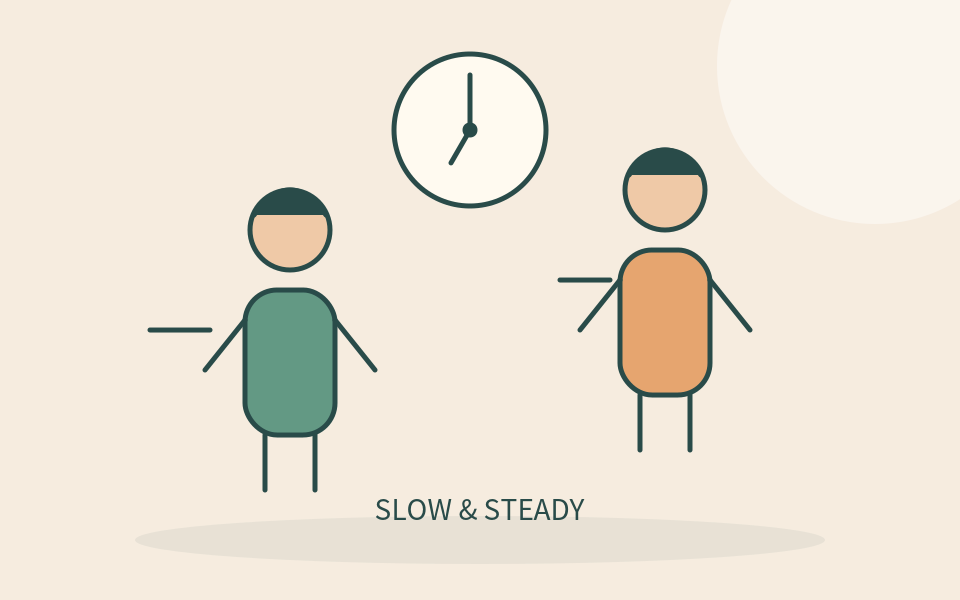
我和小明都喜欢。
每天,我们去学校。
小明跑得我,可是他跑就想。
今天,他又跑到我去了。
他说:“一点!”
我说:“你跑,我来。”
十后,我看见他坐在椅子上。
他问:“你怎么还不?”
我说:“我跑得,能多跑。”
他:“那我也你跑。”
今天,我们跑了三十,才吃。
to run
fast; quick
slow
to rest
beside
than; used for comparison
so; therefore
a little while (supplemental word / expression)
to turn one's head; to look back (supplemental word / expression)
to stand (supplemental word / expression)
with; to follow (supplemental word / expression)
together
每天早上,我们一起去学校旁边跑步。
měi tiān zǎo shàng, wǒ men yì qǐ qù xué xiào páng biān pǎo bù.
Every morning, we go running together near the school.
morning; in the morning
每天早上,我们一起去学校旁边跑步。
měi tiān zǎo shàng, wǒ men yì qǐ qù xué xiào páng biān pǎo bù.
Every morning, we go running together near the school.
in front; front
今天,他又跑到我前面去了。
jīn tiān, tā yòu pǎo dào wǒ qián miàn qù le.
Today, he runs ahead of me again.
minute
十分钟后,我看见他坐在椅子上。
shí fēn zhōng hòu, wǒ kàn jiàn tā zuò zài yǐ zi shàng.
Ten minutes later, I see him sitting on a chair.
tired
他问:“你怎么还不累?”
tā wèn: "nǐ zěn me hái bú lèi? "
He asks, “How come you're still not tired?”
slowly; take your time
我说:“你先跑,我慢慢来。”
wǒ shuō: "nǐ xiān pǎo, wǒ màn màn lái. "
I say, “You go ahead. I'll take it slowly.”
to stand up
他站起来:“那我也跟你一起慢慢跑。”
tā zhàn qǐ lái: "nà wǒ yě gēn nǐ yì qǐ màn màn pǎo. "
He stands up. “Then I'll run slowly with you too.”
to go home; to return home
今天,我们跑了三十分钟,才一起回家吃早饭。
jīn tiān, wǒ men pǎo le sān shí fēn zhōng, cái yì qǐ huí jiā chī zǎo fàn.
Today, we run for thirty minutes before going home together for breakfast.
breakfast
今天,我们跑了三十分钟,才一起回家吃早饭。
jīn tiān, wǒ men pǎo le sān shí fēn zhōng, cái yì qǐ huí jiā chī zǎo fàn.
Today, we run for thirty minutes before going home together for breakfast.
first; before something else
我说:“你先跑,我慢慢来。”
wǒ shuō: "nǐ xiān pǎo, wǒ màn màn lái. "
I say, “You go ahead. I'll take it slowly.”
Use 得 after a verb to describe how someone performs the action. This 得 is pronounced de.
动词后的“得”说明动作做得怎么样,这里的“得”读轻声。
她说得很好。She speaks very well.
他跑得很快。He runs very fast.
因为 introduces a reason; 所以 introduces a result. Either part can be used on its own when the context supplies the other.
“因为”引出原因,“所以”引出结果;语境明确时,也可以只用其中一个。
因为下雨,所以我不出去。Because it is raining, I am not going out.
我很累,所以想休息。I am tired, so I want to rest.
Turn both off to practice with Chinese only.
Answers and explanations appear after you submit.