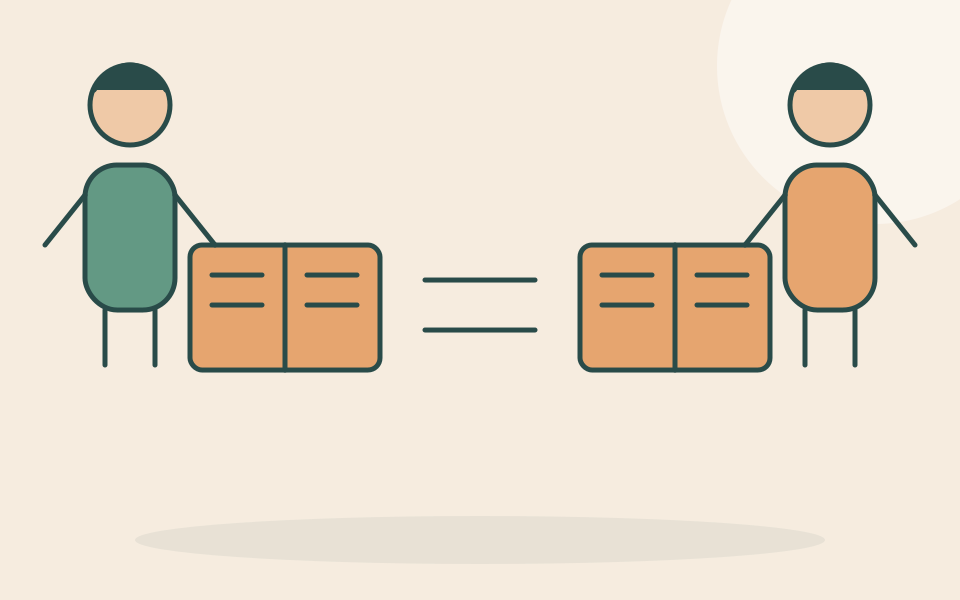
01
,我和小明在。
02
我小明:“这是我吗?”
03
小明:“不是,是我。你吗?”
04
我了:“我。”
05
小明:“有。”
06
我:“,这是你。”
07
小明:“。看!”
Sign in to keep a learning history.
Build your vocabularyA little vocabulary
depossessive or modifying particle
yíyàngthe same; alike (extension word: classic HSK3)
méi guānxiit is okay; never mind
yìqǐtogether (extension word: classic HSK2)
shuōto say (supplemental form related to 说话)
xuéxiàoschool
Example
今天,我和小明在学校看书。
Jīntiān, wǒ hé Xiǎomíng zài xuéxiào kàn shū.
Today, Xiaoming and I read at school.
zài jiāat home
Example
小明说:“不是,是我的。你的书在家吗?”
Xiǎomíng shuō: “Bú shì, shì wǒ de. Nǐ de shū zài jiā ma?”
Xiaoming says, “No, it is mine. Is your book at home?”
wǒ menwe; us
Example
小明说:“我们有一样的书。”
Xiǎomíng shuō: “Wǒmen yǒu yíyàng de shū.”
Xiaoming says, “We have the same kind of book.”
jīntiāntoday
Example
今天,我和小明在学校看书。
Jīntiān, wǒ hé Xiǎomíng zài xuéxiào kàn shū.
Today, Xiaoming and I read at school.
kàn shūto read a book
Example
今天,我和小明在学校看书。
Jīntiān, wǒ hé Xiǎomíng zài xuéxiào kàn shū.
Today, Xiaoming and I read at school.
A little grammar
Person + 的(de) — Saying whose
Person + 的(de) + thing / Person + 的(de)
的(de) links an owner to a thing. When the thing is already clear, you can leave it out after 的(de).
Chinese explanation
“的”连接人和所属的东西;东西已明确时,可以省略“的”后的名词。
这是我的书。This is my book.
这本书是我的。This book is mine.
Sentence + 吗(ma)? — Yes/no questions
Statement + 吗(ma)?
Add 吗(ma) to a statement to make a yes/no question. Do not add it to a question already using 什么(shén me) or 谁(shuí).
Chinese explanation
陈述句后加“吗”构成是非问句;已有“什么”“谁”等疑问词时,不加“吗”。
你是老师吗?Are you a teacher?
你喜欢看书吗?Do you like reading?
Check your understandingTurn both off to practice with Chinese only.
Answers and explanations appear after you submit.