01
今天,我在学习。
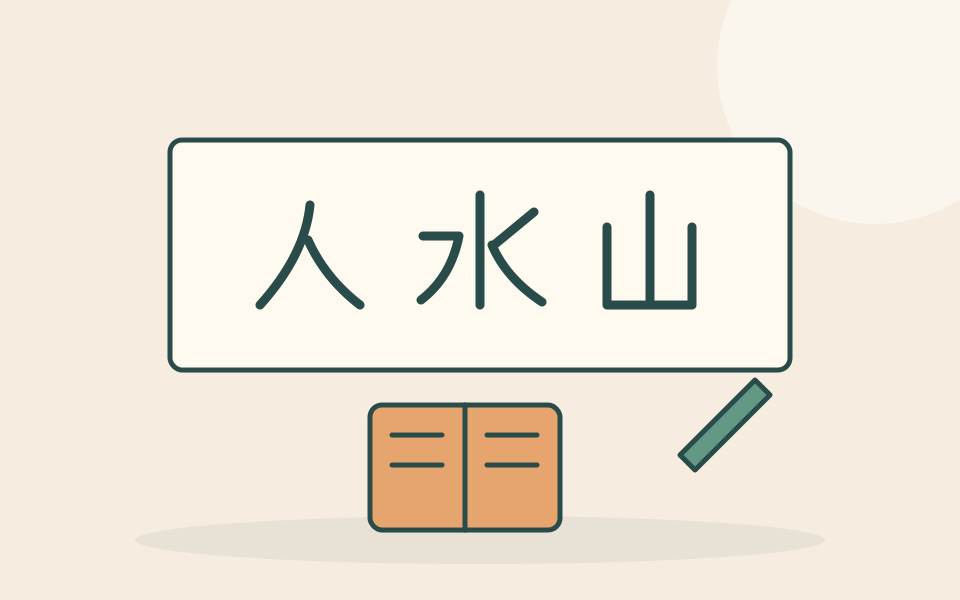
今天,我在学习。
了三个:、、。
我“”和“”,不“”。
我:“这个?”
:“。”我了,了。
现在,我这三个,了。
我,妈妈看:“这是我的!”
Chinese language
written character
mountain (extension word: classic HSK3)
to know; to recognize
how
to read aloud; to read
to write
to know how to
also (extension word: classic HSK2)
to give; for (extension word: classic HSK2)
to ask (extension word: classic HSK2)
to say (supplemental form related to 说话)
teacher
老师写了三个字:人、水、山。
Lǎoshī xiě le sān gè zì: rén, shuǐ, shān.
The teacher writes three characters: person, water and mountain.
school
今天,我在学校学习汉语。
Jīntiān, wǒ zài xuéxiào xuéxí Hànyǔ.
Today, I study Chinese at school.
person; people
老师写了三个字:人、水、山。
Lǎoshī xiě le sān gè zì: rén, shuǐ, shān.
The teacher writes three characters: person, water and mountain.
water
老师写了三个字:人、水、山。
Lǎoshī xiě le sān gè zì: rén, shuǐ, shān.
The teacher writes three characters: person, water and mountain.
to listen; to hear
老师说:“山。”我听了,也读了。
Lǎoshī shuō: “Shān.” Wǒ tīng le, yě dú le.
The teacher says, “Shān.” I listen and read it aloud too.
to go home; to return home
我回家,给妈妈看:“这是我写的字!”
Wǒ huí jiā, gěi māma kàn: “Zhè shì wǒ xiě de zì!”
I go home and show my mother. “These are the characters I wrote!”
Use 会 for a learned skill. 不会 means someone does not know how to do it.
“会”表示掌握一种技能;“不会”表示还不具备这项技能。
我会写这个字。I know how to write this character.
他不会说汉语。He does not know how to speak Chinese.
Use 怎么 before a verb to ask how an action is done.
“怎么”放在动作前,询问做事的方法。
你怎么去学校?How do you get to school?
这个字怎么读?How do you read this character?
Turn both off to practice with Chinese only.
Answers and explanations appear after you submit.