01
我和小明从出来,下起了。
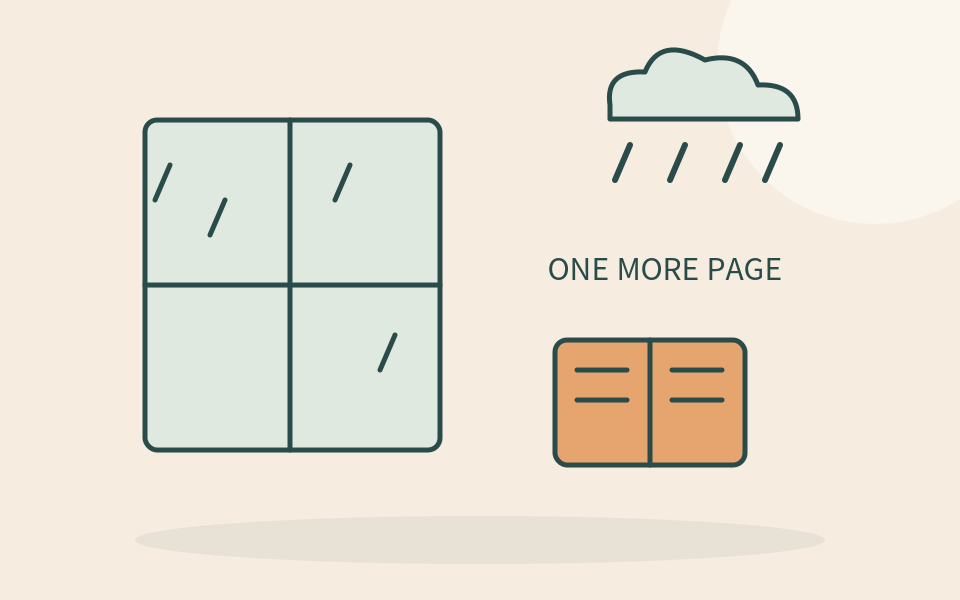
我和小明从出来,下起了。
我们都没带,站在。
我看了几次,。
小明问:“你不是说今天下午吗?”
我说:“,可是站在这里,什么也。”
他从包里刚的书,问:“你想知道这个怎么样吗?”
我。
他一段,我一段,的地方就想。
过了一会儿,小明抬起头说:“雨好像了。”
我看了看外面,真的不下了。
我说:“一下,让我先把这。”
刚才觉得很长的,最后却有点不够用了。
library
我和小明从图书馆出来,突然下起了大雨。
wǒ hé xiǎo míng cóng tú shū guǎn chū lái, tū rán xià qǐ le dà yǔ.
Xiaoming and I left the library, and heavy rain suddenly began.
suddenly (supplemental word)
我和小明从图书馆出来,突然下起了大雨。
wǒ hé xiǎo míng cóng tú shū guǎn chū lái, tū rán xià qǐ le dà yǔ.
Xiaoming and I left the library, and heavy rain suddenly began.
heavy rain
我和小明从图书馆出来,突然下起了大雨。
wǒ hé xiǎo míng cóng tú shū guǎn chū lái, tū rán xià qǐ le dà yǔ.
Xiaoming and I left the library, and heavy rain suddenly began.
umbrella (supplemental word / expression)
我们都没带伞,只好站在门口等。
wǒ men dōu méi dài sǎn, zhǐ hǎo zhàn zài mén kǒu děng.
Neither of us had an umbrella, so we had to wait at the entrance.
to have no choice but to (supplemental expression)
我们都没带伞,只好站在门口等。
wǒ men dōu méi dài sǎn, zhǐ hǎo zhàn zài mén kǒu děng.
Neither of us had an umbrella, so we had to wait at the entrance.
entrance; doorway (supplemental word / expression)
我们都没带伞,只好站在门口等。
wǒ men dōu méi dài sǎn, zhǐ hǎo zhàn zài mén kǒu děng.
Neither of us had an umbrella, so we had to wait at the entrance.
to wait
我们都没带伞,只好站在门口等。
wǒ men dōu méi dài sǎn, zhǐ hǎo zhàn zài mén kǒu děng.
Neither of us had an umbrella, so we had to wait at the entrance.
time
我看了几次时间,越来越着急。
wǒ kàn le jǐ cì shí jiān, yuè lái yuè zháo jí.
I checked the time several times and became increasingly anxious.
more and more; increasingly
我看了几次时间,越来越着急。
wǒ kàn le jǐ cì shí jiān, yuè lái yuè zháo jí.
I checked the time several times and became increasingly anxious.
to be anxious; to be in a hurry
我看了几次时间,越来越着急。
wǒ kàn le jǐ cì shí jiān, yuè lái yuè zháo jí.
I checked the time several times and became increasingly anxious.
to have free time; to be available
小明问:“你不是说今天下午有空吗?”
xiǎo míng wèn: "nǐ bú shì shuō jīn tiān xià wǔ yǒu kòng ma? "
Xiaoming asked, “Didn't you say you were free this afternoon?”
continuously; all along (supplemental word / expression)
我说:“有空,可是一直站在这里,什么也做不了。”
wǒ shuō: "yǒu kòng, kě shì yì zhí zhàn zài zhè lǐ, shén me yě zuò bu liǎo. "
I said, “I am, but standing here, I can't do anything.”
to be unable to do something
我说:“有空,可是一直站在这里,什么也做不了。”
wǒ shuō: "yǒu kòng, kě shì yì zhí zhàn zài zhè lǐ, shén me yě zuò bu liǎo. "
I said, “I am, but standing here, I can't do anything.”
to take out
他从包里拿出刚借的书,问:“你想知道这个故事后来怎么样吗?”
tā cóng bāo lǐ ná chū gāng jiè de shū, wèn: "nǐ xiǎng zhī dào zhè ge gù shì hòu lái zěn me yàng ma? "
He took the book he'd just borrowed from his bag. “Want to know what happens next in this story?”
to borrow
他从包里拿出刚借的书,问:“你想知道这个故事后来怎么样吗?”
tā cóng bāo lǐ ná chū gāng jiè de shū, wèn: "nǐ xiǎng zhī dào zhè ge gù shì hòu lái zěn me yàng ma? "
He took the book he'd just borrowed from his bag. “Want to know what happens next in this story?”
story
他从包里拿出刚借的书,问:“你想知道这个故事后来怎么样吗?”
tā cóng bāo lǐ ná chū gāng jiè de shū, wèn: "nǐ xiǎng zhī dào zhè ge gù shì hòu lái zěn me yàng ma? "
He took the book he'd just borrowed from his bag. “Want to know what happens next in this story?”
later; afterwards
他从包里拿出刚借的书,问:“你想知道这个故事后来怎么样吗?”
tā cóng bāo lǐ ná chū gāng jiè de shū, wèn: "nǐ xiǎng zhī dào zhè ge gù shì hòu lái zěn me yàng ma? "
He took the book he'd just borrowed from his bag. “Want to know what happens next in this story?”
nodded (supplemental expression)
我点了点头。
wǒ diǎn le diǎn tóu.
I nodded.
to read aloud; to read
他读一段,我读一段,不懂的地方就一起想。
tā dú yí duàn, wǒ dú yí duàn, bù dǒng de dì fang jiù yì qǐ xiǎng.
He read one passage and I read another, and we worked out the difficult parts together.
not to understand
他读一段,我读一段,不懂的地方就一起想。
tā dú yí duàn, wǒ dú yí duàn, bù dǒng de dì fang jiù yì qǐ xiǎng.
He read one passage and I read another, and we worked out the difficult parts together.
together (extension word: classic HSK2)
他读一段,我读一段,不懂的地方就一起想。
tā dú yí duàn, wǒ dú yí duàn, bù dǒng de dì fang jiù yì qǐ xiǎng.
He read one passage and I read another, and we worked out the difficult parts together.
to stop
过了一会儿,小明抬起头说:“雨好像停了。”
guò le yí huì er, xiǎo míng tái qǐ tóu shuō: "yǔ hǎo xiàng tíng le. "
After a while, Xiaoming looked up. “It seems the rain has stopped.”
to finish reading
我说:“等一下,让我先把这一页读完。”
wǒ shuō: "děng yí xià, ràng wǒ xiān bǎ zhè yí yè dú wán. "
I said, “Wait a moment. Let me finish this page first.”
one page
我说:“等一下,让我先把这一页读完。”
wǒ shuō: "děng yí xià, ràng wǒ xiān bǎ zhè yí yè dú wán. "
I said, “Wait a moment. Let me finish this page first.”
Use 只好 when circumstances leave no better choice. It suggests the action was not the first preference.
“只好”表示没有更好的办法,只能这样做。
我们没带伞,只好等雨停。We had no umbrella, so we had to wait for the rain to stop.
照片没准备好,我只好马上找。The photos were not ready, so I had to look for them immediately.
Use 越来越 to describe a gradual change in a quality or feeling.
“越来越”表示一种情况逐渐发生变化。
叶子越来越黄。The leaves are getting yellower.
我越来越着急。I am getting more and more anxious.
Turn both off to practice with Chinese only.
Answers and explanations appear after you submit.