WMWei WorldSign up
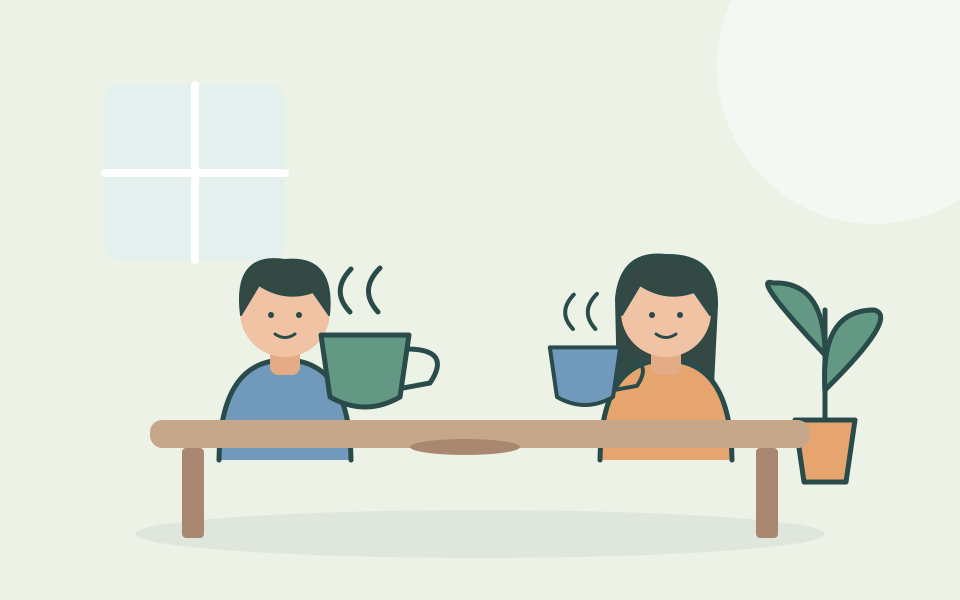
Two friends having tea and water at home

A little reading

01

和(hé)是(shì)。

02

,在(zài)。

03

:“你(Nǐ)?”

04

:“我(Wǒ)。你(Nǐ)?”

05

:“我(Wǒ)。”

06

。

07

“了(le)!”。

08

“我(Wǒ)了(le)。我(Wǒ)。”

09

:“你(Nǐ)吗(ma)?”

10

:“我(Wǒ)。,的(de)了(le)。”

11

:“,我(wǒ),你(nǐ)。”

Sign in to keep a learning history.
Build your vocabulary

A little vocabulary

péngyou

friend

jīntiān

today

jiā

home

hē

to drink

shénme

what

chá

tea

shuǐ

water

ne

particle used here to ask “what about…?”

rè

hot

xǐhuan

to like

shuō

to say; to speak (supplementary form related to 说话 in the HSK1 list)

dànshì

but (above this reading’s level: HSK2)

Xiǎomíng

Xiaoming (a person’s name)

Xiǎoměi

Xiaomei (a person’s name)

tài

too; very

Example

“茶太热了!”小美说。
“Chá tài rè le!” Xiǎoměi shuō.
“The tea is too hot!” says Xiaomei.

bù

not; used to make a statement negative

Example

“我不喝茶了。我喝水。”
“Wǒ bù hē chá le. Wǒ hē shuǐ.”
“I won’t have any more tea. I’ll have water.”

hǎo

good; okay

Example

小明说:“好,我喝茶,你喝水。”
Xiǎomíng shuō: “Hǎo, wǒ hē chá, nǐ hē shuǐ.”
Xiaoming says, “Okay, I’ll have tea, and you can have water.”

Notice the pattern

A little grammar

你呢(nǐ ne)? — What about you?

Person / topic + 呢(ne)?

Use 呢(ne) to ask “What about…?” after someone has answered a question. Example: 我喝茶(wǒ hē chá)。你呢(nǐ ne)? = I’ll have tea. What about you? The earlier sentence tells us what you are asking.

Chinese explanation

用(yòng)“呢(ne)”接(jiē)着(zhe)询(xún)问(wèn)另(lìng)一(yí)个(gè)人(rén)或(huò)话(huà)题(tí)。具(jù)体(tǐ)问(wèn)什(shén)么(me),要(yào)根(gēn)据(jù)前(qián)面(miàn)的(de)对(duì)话(huà)判(pàn)断(duàn)。

我(Wǒ)喝(hē)茶(chá)。你(Nǐ)呢(ne)?

I’ll have tea. What about you?

我(Wǒ)是(shì)老(lǎo)师(shī)。你(Nǐ)呢(ne)?

I’m a teacher. What about you?

不(bù) + verb — Saying no to an action

Subject + 不(bù) + verb

Put 不(bù) before a verb to say “do not” or “will not”. Example: 我(wǒ) + 不(bù) + 喝茶(hē chá) = I + do not + drink tea. In the story, 我不喝茶了(wǒ bù hē chá le) means “I won’t have any more tea”: 了(le) shows a change. Xiaomei still likes tea.

Chinese explanation

“不(bù)”放(fàng)在(zài)动(dòng)词(cí)或(huò)动(dòng)词(cí)短(duǎn)语(yǔ)前(qián),表(biǎo)达(dá)否(fǒu)定(dìng)。文(wén)中(zhōng)的(de)“我(wǒ)不(bù)喝(hē)茶(chá)了(le)”表(biǎo)示(shì)现(xiàn)在(zài)停(tíng)止(zhǐ)喝(hē)茶(chá);句(jù)末(mò)“了(le)”表(biǎo)示(shì)变(biàn)化(huà),并(bìng)不(bù)表(biǎo)示(shì)她(tā)不(bù)喜(xǐ)欢(huan)茶(chá)。

我(Wǒ)不(bù)喝(hē)茶(chá)。

I don’t drink tea / I won’t have tea, depending on context.

我(Wǒ)不(bù)喜(xǐ)欢(huan)喝(hē)茶(chá)。

I don’t like drinking tea.

太(tài)……了(le) — Too… / So…

太(tài) + adjective + 了(le)

Use 太(tài) before an adjective and 了(le) at the end to say “too…” or “so…”. Example: 茶(chá) + 太(tài) + 热(rè) + 了(le) = The tea is too hot. 太好了(tài hǎo le) means “That’s great!” Here, 了(le) does not mean past tense.
Chinese explanation

“太(tài)+形(xíng)容(róng)词(cí)+了(le)”表(biǎo)示(shì)程(chéng)度(dù)很(hěn)高(gāo),具(jù)体(tǐ)含(hán)义(yì)由(yóu)语(yǔ)境(jìng)决(jué)定(dìng)。文(wén)中(zhōng)表(biǎo)示(shì)茶(chá)热(rè)得(dé)不(bú)适(shì)合(hé)小(xiǎo)美(měi)继(jì)续(xù)喝(hē)。这(zhè)里(lǐ)的(de)“了(le)”不(bú)是(shì)简(jiǎn)单(dān)的(de)过(guò)去(qù)时(shí)标(biāo)记(jì)。

茶(Chá)太(tài)热(rè)了(le)!

The tea is too hot!

太(Tài)好(hǎo)了(le)!

That’s great!

Check your understanding

A little practice

Turn both off to practice with Chinese only.

Answers and explanations appear after you submit.

1. 今天,小美在哪里?

Jīntiān, Xiǎoměi zài nǎlǐ?

2. 小美喜欢喝什么?

Xiǎoměi xǐhuan hē shénme?

3. 小美说茶太热了。她现在喝什么?

Xiǎoměi shuō chá tài rè le. Tā xiànzài hē shénme?

4. 小明和小美是朋友。

Xiǎomíng hé Xiǎoměi shì péngyou.

5. 小美不喜欢喝茶。

Xiǎoměi bù xǐhuan hē chá.

6. 小明说:“我喝茶,你喝水。”

Xiǎomíng shuō: “Wǒ hē chá, nǐ hē shuǐ.”